
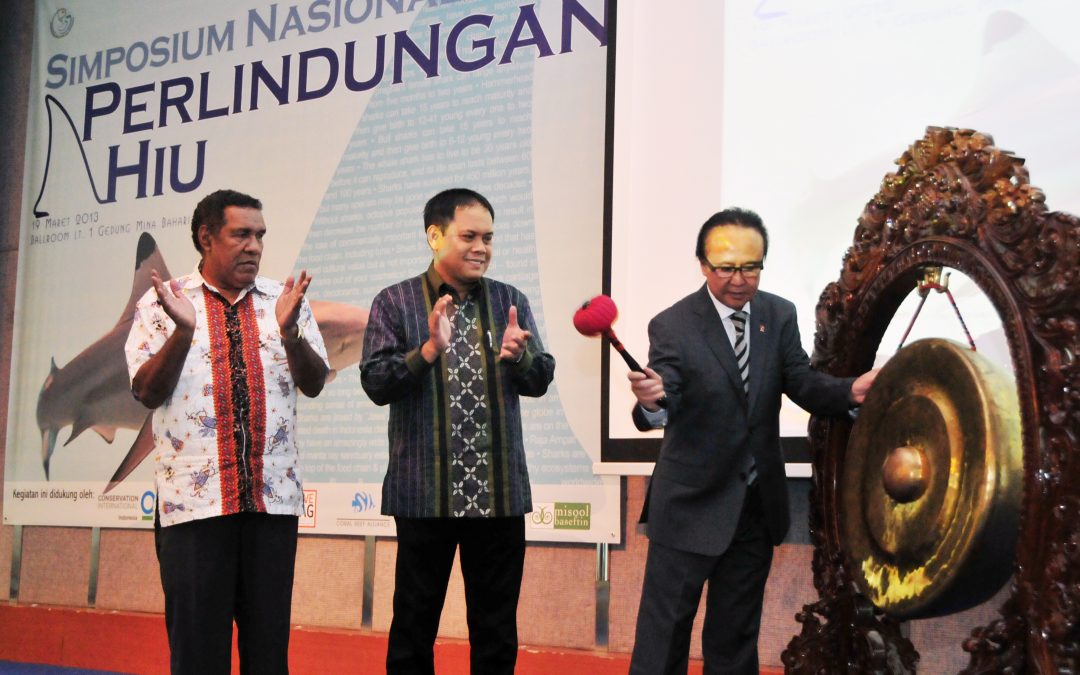
Indonesia’s Minister of Marine Affairs and Fisheries has called for a ban on unsustainable manta ray and shark fisheries during Indonesia’s first national symposium on shark and ray conservation in Jakarta on March 19, 2013.
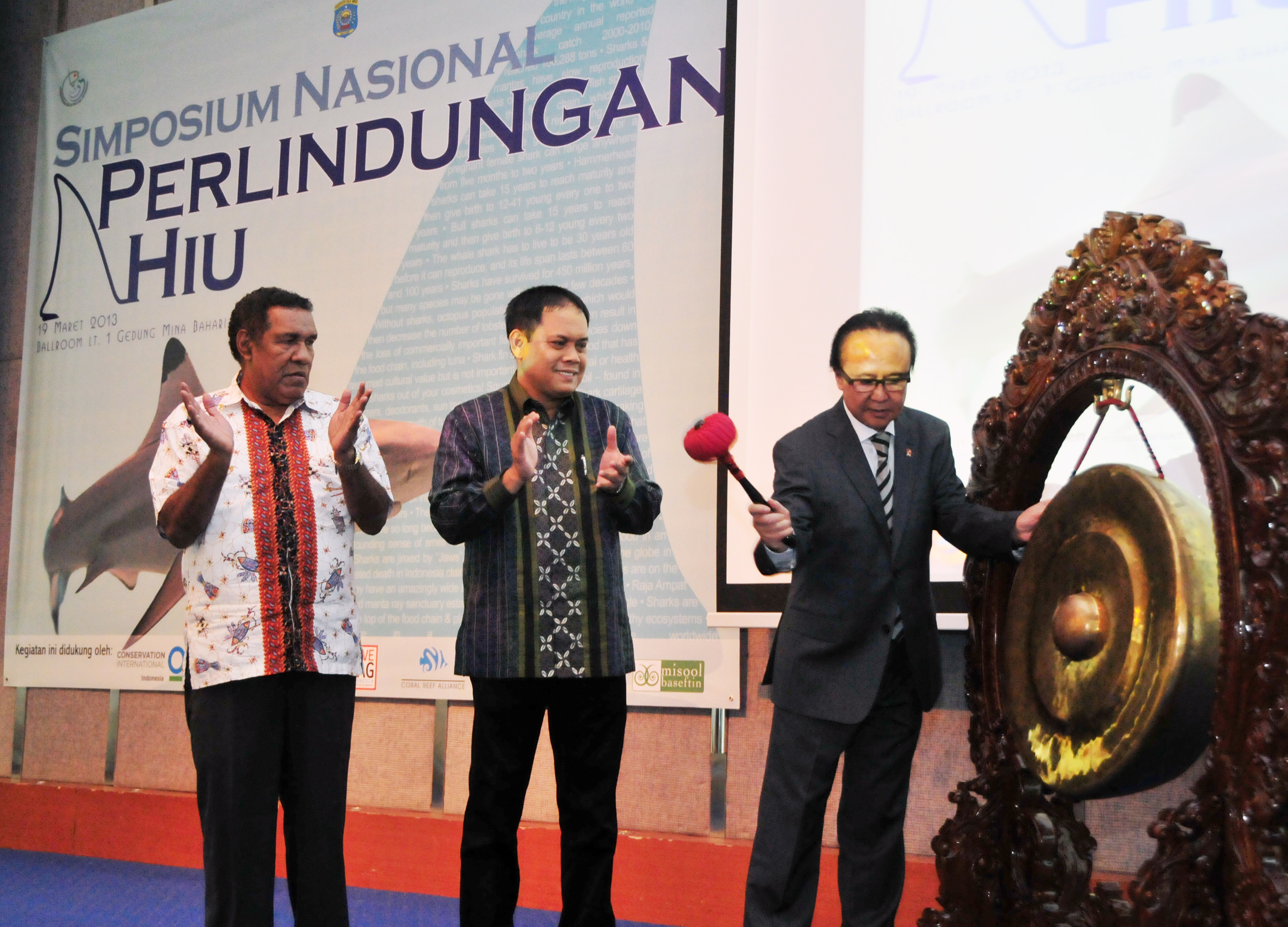
The MInister announces Raja Ampat’s shark and ray sanctuary
The Symposium marked two recent landmark achievements for manta ray and shark conservation. On March 14, 179 countries voted to list two manta and five shark species under CITES Appendix II, bringing enhanced protection under international trade regulations. Meanwhile the provincial government of West Papua has officially designated and signed into law a 46,000 km2 shark and manta ray sanctuary in Raja Ampat, where anyone caught hunting these species faces a six month prison sentence and US$ 5,000 fine.
The Minister expressed his considerable support for protecting manta rays, explaining that local communities stand to gain more from keeping mantas alive and encouraging tourism, than from unsustainable fishing practices. “I hope that the actions of the Raja Ampat administration encourages other areas of Indonesia to follow, particularly in places like East Nusa Tenggara and West Nusa Tenggara, where manta rays and sharks remain threatened,” he said.

The Minister urges other provinces to follow Raja Ampat’s example
Such support from the highest levels of government is indicative of a changing tide for manta ray and shark conservation in Indonesia. It is testament to the Government of Indonesia’s vision and commitment to preserving the nation’s natural resources, as well as to the support of MantaWatchers around the world who signed the petition to Save Manta Rays in Indonesia.
Shark and manta fisheries are largely unregulated and unreported throughout the country, with no management plans in place to ensure the sustainability of threatened populations and the livelihoods they support. Contributing to this situation is a lack of scientific information to assist decision makers in forming management strategies and evaluating trade offs.
CITES has provided the impetus to expand research and monitoring of manta rays and sharks throughout Indonesia. Strengthening of Indonesia’s National Plan of Action for Sharks and Rays would provide clear guidance to fishery officers and other stakeholders on how best to protect these threatened species. Success will require hard work and resources, including human resources. People who, through initiatives such as the MantaWatch Internship Program, have developed the skills, experience and commitment needed to become local champions.
The Symposium made several key recommendations for manta and shark conservation in Indonesia. Perhaps most important was the call for a moratorium on all targeted manta and mobula fisheries, until such time as they can be demonstrated to be sustainable. We applaud the Government of Indonesia’s vision, and look forward to reporting the next big achievements.