 It would be fair to say that the majority of ID photos uploaded to our manta database are taken by divers. Scuba provides some very obvious benefits when photographing large underwater creatures, allowing you to approach slowly and bide your time, waiting for the right shot.
But there are some drawbacks. Bulky equipment can be cumbersome and restrict movement. While the noisy bubbles expelled from open-circuit scuba may startle mantas cruising overhead.
Under the right conditions, free-diving with a compact camera is a liberating experience. Unencumbered, one can twist and turn, following the mantas’ play. At times, it is almost as if the mantas can sense that your time beneath the waves is limited. And feeling unthreatened, they will often approach a free-diver much closer than they will a scuba diver.
Snorkelling and free-diving offer some great opportunities for capturing manta ID photos, allowing divers and non-divers alike to play an important role in MantaWatch. But there is always that niggling and inconvenient need to breathe, that will force you to the surface just as the ideal photo opportunity presents itself.
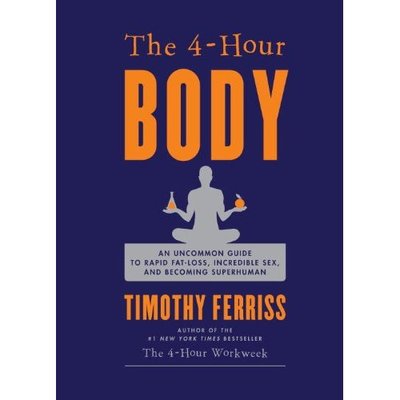
Fortunately, some simple exercise and preparations can help to extend your breath hold time. We just received a copy of The Four Hour Body, the latest book by best selling author, entrepreneur and angel investor Tim Ferriss. Inside, Tim explains how to hold your breath like Houdini, and describes his experience training with illusionist and endurance artist David Blaine.
He had been buried alive in April 1999, spending a week underground in a plastic coffin. He ate and drank nothing but a few tablespoons of water each day.
He had been frozen alive in November 2000, encasing himself in a block of ice for nearly 64 hours. The ice was broken away with chainsaws, and he spent a month in recovery before he could walk again.
Impressive, yes. But these stunts didn’t satisfy him. Looking for bigger and bolder challenges, he set his sights on the breath-holding world record. How hard could it be to fake? He tried having a breathing tube the size of a vacuum hose pushed down his throat under sedation. It failed. All of his attempts failed. Then it occurred to him that he could simply bite the bullet and take the craziest approach of all: actually holding his breath.
Travelling from Navy SEAL training to the tropics, he figured it out. Then, for four months, David held the Guinness world record for oxygen assisted static apnea (holding your breath after breathing pure oxygen):
17 minutes and 4.4 seconds!
His record was surpassed by Tom Sietas on 19 September 2008, but this wasn’t surprising. Tom is a professional free diver and built for it. David was an anomaly, a product of pure conditioning.
This is why, when I bumped into him at the medical conference TEDMED, I begged him to train me. See, I am also an anomaly. When I was born premature, my left lung collapsed. I couldn’t remember the last time I’d held my breath for more than one minute.
He agreed, and I joined a small group in a closed-door training session the next evening. The training lasted 15 minutes.
The results?
Before: 40 secs.
After: 3 mins and 33 secs (!!!)Out of roughly 12 TEDMED attendees he taught, all but one beat Harry Houdini’s life-long record of 3 minutes and 30 seconds. One woman held her breath for more than five minutes. Roni Zeiger MD, Google’s Chief Health Strategist, topped out at an unbelievable 4:05 and remembers the experience vividly:
“We were tricking our bodies into doing something, and the tingling in my fingers and light-headedness made that clear. For me, it was like skydiving–I felt powerful, vulnerable, am lucky to have done it, and I probably won’t do it again.”
Clearly we are not recommending that you strive for tingling fingers and light-headedness whilst in the water. Hypoxia of the blood, combined with a decrease in the partial pressure of oxygen while ascending from a breath holding dive, can lead to sudden unconsciousness or “shallow water blackout”. In the January 2011 edition of the DAN Asia-Pacific magazine, John Lippmann takes a detailed look at this very issue.
However Tim’s book does contain some very accessible exercises to help extend the capacity of your lungs which you can practice in the comfort of you own arm-chair. These exercises may help you prolong your manta encounters. Just remember, proper training from a professional instructor is the best way to learn to snorkel and free-dive, and always enter the water with a buddy.
Tim has sent us five copies of his book The Four Hour Body to give away to lucky MantaWatchers. We’ll be posting details about how to get your hands on one soon, so watch this space. Suffice to say, there will be some “rewards” for our most active MantaWatchers.