
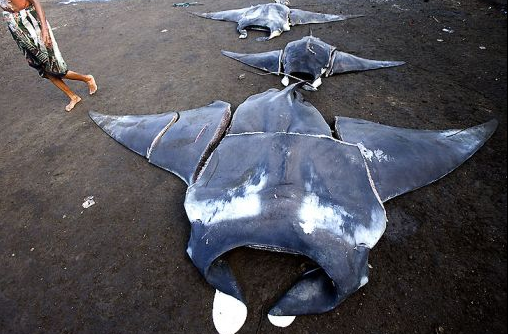
courtesy Paul Hilton
Manta rays are being increasingly targeted by unregulated fisheries. The wings are used as a filler in shark fin soup to supplement declining shark catches. While the gill rakers fetch 4-5 times the value of shark fin in the lucrative Chinese medicine industry.
Meanwhile mantas are listed as DD/NT – “data deficient” and “near threatened” – throughout most of their range. There are numerous reports in scientific journals, nature publications and online blogs that highlight the scale and impact of these industries on the natural environment.
But none comes close to the devastating impact of “Mantas and Mobula Rays“, a portfolio of images by Paul Hilton.
Paul is a photographer and photo-journalist. A member of the International League of Conservation Photographers, Paul has worked in some of the most challenging area of the world.
While working on a book about shark finning, Paul started to notice a worrying trend. As shark numbers decline from overfishing, [intlink id=”78″ type=”post”]fishermen are turning[/intlink] to [intlink id=”80″ type=”post”]mantas as an alternative[/intlink].
His photos highlight the brutal and disturbing nature of this trade. You can see his portfolio and read about his experience here.
Let us know your reactions in the comments. Should manta ray fisheries be banned? Or are mantas a valuable natural resource that require tighter regulation? Share your thoughts below.