
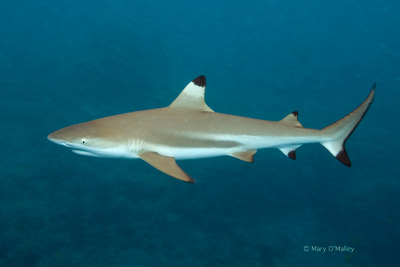
Courtesy Misool Eco Resort
Today, November 16 2010, is a historic day. Today Indonesia took a giant step towards the protection and sustainable management of its threatened shark and ray populations.
The entire Raja Ampat conservation area in northwest Papua was today designated as a Shark Sanctuary by the district’s Regent, Bupati Drs Marcus Wanma, a testament to his vision and leadership in marine conservation.
The Shark Sanctuary, which covers an area of 17,760 sq miles, is the first of its kind in Indonesia. Within its boundaries, full protection has been awarded to mantas, mobulas, sharks, dugongs, and turtles, and highly destructive practices including reef bombing and the aquarium fish trade are prohibited.
The new Shark Sanctuary builds on the Raja Ampat government’s previous conservation achievements, including implementation of the 164 sq mile Misool Marine Conservation Area in 2005, creation of a network of seven Marine Protected Areas in 2007, and extension of the Misool Marine Conservation Area to 468 sq miles in 2010. A collaborative approach has ensured success, involving local communities, local businesses such as Misool Eco Resort, and NGOs including Conservation International, The Nature Conservancy, SharkSavers, WildAid and the Coral Reef Alliance.
The Shark Sanctuary is expected to help protect manta rays from overfishing to supply the shark fin and Chinese medicine trades. Currently 75% of sharks and rays in Raja Ampat are threatened with local extinction.
The Sanctuary will also attract underwater ecotourists, bringing economic benefits to the area, offsetting enforcement costs, and providing alternative livelihood opportunities for local communities.
Share your thoughts in the comments below. Will the designation of this new Shark Sanctuary draw you to Raja Ampat? Would you like to see more Shark Sanctuaries in other parts of Indonesia and around the world? Let us know below.