
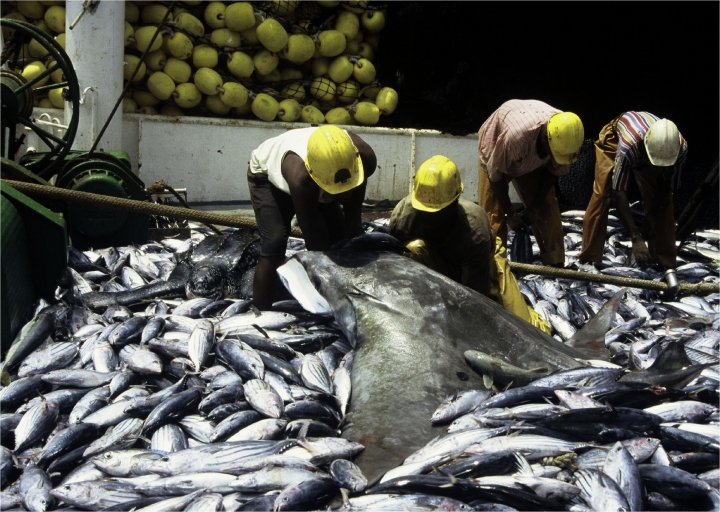
Manta ray bycatch
Manta ray tourism has the potential to be multi-million dollar industry in Indonesia, but is it competing head to head with the fisheries industry?
Conservation is about people and economics, as much as it is about wildlife. Indonesia’s Ministry of Maritime Affairs and Fisheries predicts that fishery exports will top US$ 3.2 billion in 2011. This is good news for the country’s developing economy, but what does it mean for the environment?
The story is an all too familiar one worldwide. Decision-makers, driven by the need to secure votes, favour short-term economic goals over long-term environmental investments.
Conservationists often tout tourism as a solution. They argue that environmental and economic goals can go hand-in-hand; the costs of regulating industry and protecting wildlife offset by the benefits that nature-based tourism can bring.
In 2010 Indonesian fisheries contributed US$ 16.4 billion to the gross domestic product. Tourism generated less than half this figure, at US$ 7.6 billion.
Of course this simple comparison only tells part of the story. In marine conservation it is possible to have your cake and eat it too. Well-managed marine areas can support sustainable fisheries growth, while simultaneously protecting habitats and generating tourism revenue.
But in the government halls of Jakarta, where buzz words, sound bites and attention grabbing headlines rule, decision-makers are likely to focus on the short-term prize.
So is marine tourism the road to manta ray protection? There is no doubt that tourism has a vital role to play in protecting manta rays, but by itself it may not be the complete panacea.
To make up this US$ 7 billion deficit and compete with fisheries on a level playing field in terms of jobs and livelihoods will require more than just a vibrant tourism sector.
It will require an understanding of and appreciation for the intrinsic and non-market values of manta rays, and a dramatic shift in our economic compass. The magic of encountering a manta in its natural habitat, or the deep spiritual and cultural links between indigenous communities and the natural world, certainly add immense value to society.
The loss of these values affects us all, yet they are not considered in current measures of profit or loss–in economists’ jargon they are externalities. These are the true cost of biodiversity loss, and the value of these ecosystem services deserve greater prominence in government and business planning.
But perhaps most critically, we need revolutionary new ideas. Ideas that are competitive in terms of profit, and their positive social and environmental impacts.
Entrepreneurs with the vision to create innovative new markets and pro-biodiversity businesses. Leaders able to demonstrate that a living manta ray contributes more to GDP and social quality than a sack of dried gill rakers. And innovators able to reverse the market incentives driving manta ray decline. Much like the failing whaling industry, the future of manta ray fisheries depends on their profitability.
But what are your opinions? Does business and profit have a role in manta ray conservation? How much is a manta ray worth? At what stage does manta ray conservation become too expensive to try? And who should foot the bill? Share you opinions below.